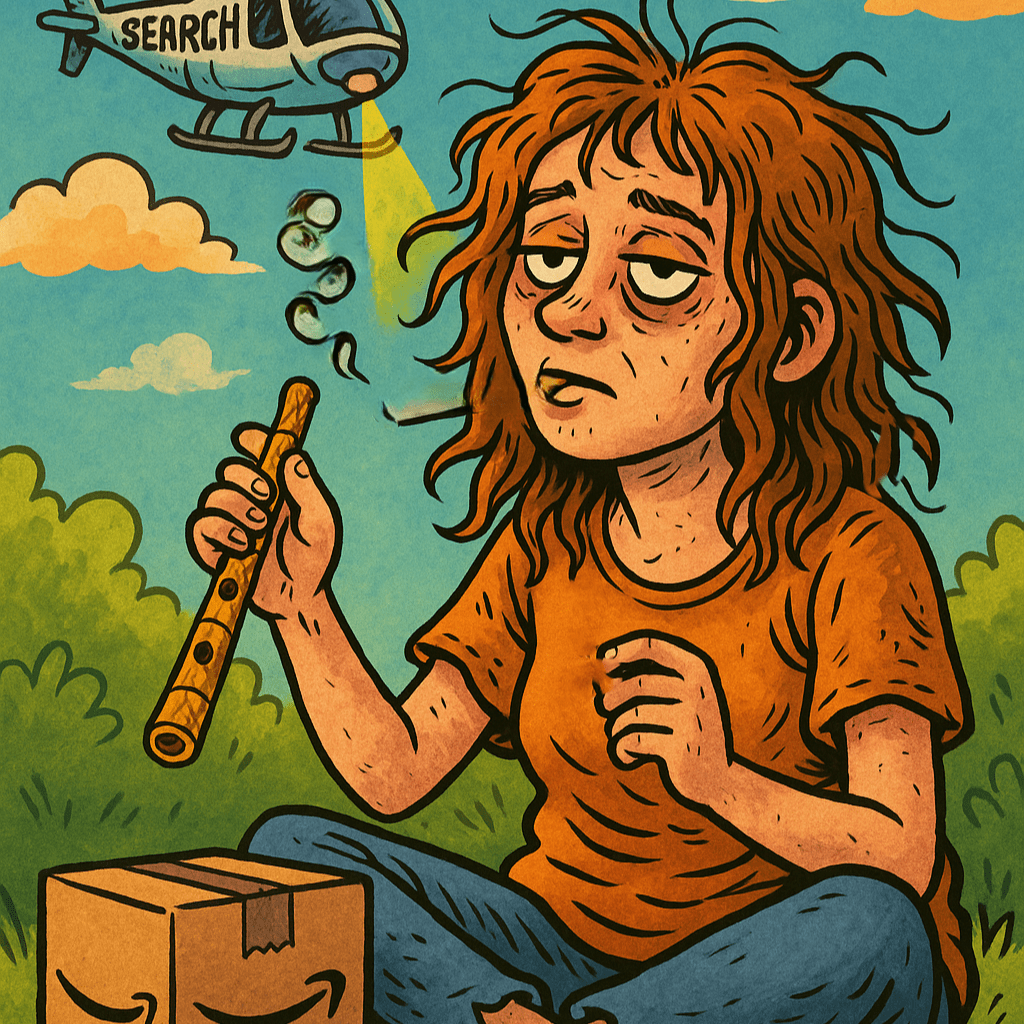
David Arthur Johnston hasn’t spent a dime in nearly 20 years. No cash, no cards, no Amazon Prime membership. His entire life is one giant middle finger to the financial system, the rest of us not only live in but cling to like a security blanket. He doesn’t just reject money, he sees it as immoral, a trap that enslaves people to debt, fear, and compromise. He believes survival shouldn’t come with a price tag, that we could live in a self-sustaining world where food, shelter, and kindness flow freely without a dollar changing hands.
Sounds noble, right? It may be tempting, especially after checking your bank account after the grocery trip. But let’s be real: would it actually work?
Johnston’s money-free life is a high-wire act of radical choice and staggering sacrifice. He survives on community goodwill, salvaged goods, and whatever the universe happens to toss his way. Once, after he threw his bamboo flute into the ocean, he received a new one the very next day from a stranger, a moment he chalked up to karma doing its thing. Stories like that make it seem almost magical, like the universe conspires to take care of you if you just opt out of the system. But magic doesn’t fill your Amazon cart or guarantee dinner on the table.
Of course, not everyone sees Johnston as enlightened. Many strangers call him “crazy,” unable to wrap their heads around a life without money. He’s never been officially deemed mentally ill, but he wears the label unbothered, arguing that clinging to a money-based system is the real madness. To him, his choices are about truth and freedom, even if they’ve cost him friendships, health, and even time with his children. While he says he thinks of them every day, his refusal to use money made him unreliable as a father, unable to promise visits or stability. Their feelings aren’t widely documented, but his absence is a wound that lingers. He defines his relationship with his children as the biggest sacrifice of all.
Johnston’s money-free life is part idealism, part sacrifice, and a splash of ‘are you kidding me? He sleeps in shelters or parks, relies on the kindness of strangers, and has given up traveling to see loved ones because, well, flights cost money. His health has taken hits. He hasn’t seen his kids in a decade. Yet, he’s unwavering in his belief that if everyone quit money together, even for a day, we’d wake up in a better, freer world.
Now, let’s talk about the rest of us. I’m self-aware enough to admit that if I went cold turkey on money, I’d last about 48 hours before my Amazon account triggered a welfare check. Honestly, I think Jeff Bezos himself might dispatch a drone to see what went wrong.
And even if we did give it a try, would it ever truly work? Could a modern society suddenly pivot to barter and goodwill? Imagine trading your neighbor three homemade lasagnas for an oil change or your best sourdough loaf for a haircut. It sounds quaint, even idyllic, but scale that up to medical care, housing, or electricity, and the logistics start to look messier than my junk drawer.
So here’s the challenge: What would your life look like if you ditched money tomorrow? Would you barter your way through, or would you feel naked without your debit card? Johnston says we’re all “indentured servants” until the debt is gone. Maybe he’s right. Or maybe money isn’t the villain, it’s just the messy, imperfect glue holding civilization together.
Either way, next time you one-click that Amazon order, maybe pause and think: If money disappeared overnight, how would you eat, sleep, and survive? Would you grow your own food, swap favors with your neighbors? Sure, a moneyless utopia sounds dreamy, until you realize your best barter offer for toilet paper is a half-burnt candle and some leftover meatloaf.

 The Creative Quill
Leave a comment