In a 2024 post on his blog Raptitude, David Cain made a game-changing but simple point: most of us don’t actually need more “goals.” What we need are quests. Goals, he argued, are narrow and transactional – something you check off a list. Quests, on the other hand, are messy, unpredictable, and transformative. They assume obstacles, demand persistence, and, if you stick with them, they change who you are in the process.
And honestly, he’s right. Because if we’re being real, “goals” feel about as inspiring as a tax return. So, let’s stop pretending: “goals” are just adult homework. Write the paper, eat the broccoli, jog until your knees sound like bubble wrap. Congratulations, you’re dull, tired, and about as inspired as someone alphabetizing their spice rack at midnight.
Goals are basically that boring group project in school where one person (you) does all the work, and nobody claps when you’re done. You tell yourself, “Once I hit my goal, I’ll be happy.” But instead, it’s like getting a participation trophy for showing up to a meeting that should’ve been an email and a vague sense of emptiness.
Think about it, nobody ever threw a parade for “meeting quarterly sales targets” or “finally organizing the Tupperware drawer.” No, goals sit there in a color-coded planner, glaring at you like unpaid bills. And the kicker? Even when you achieve one, another pops up immediately, like a whack-a-mole of disappointment.
That’s the problem with goals. They’re sterile. Transactional. The equivalent of eating a plain rice cake and pretending you’re full.
But a quest? Oh, that’s epic. That’s how you explain to your family why you haven’t returned their texts in three weeks. “Sorry, Mom, can’t talk. I’m on a quest.” Suddenly, you’re not avoiding Thanksgiving, you’re saving Middle-earth (this is a reference from the book series The Lord of the Rings by J.R. Tolkien).
Think about it:
- “Save money” = dull versus “Amass gold for my dragon’s hoard” = cinematic!
- “Declutter the basement” = tedious VERSUS “Unearth ancient relics guarded by the dust-bunnies of Mordor (For God’s sake, read the book!)” = heroic.
Even flossing sounds better if you call it defeating the plaque overlords.
Goals make you feel like you’re failing every time life throws you for a loop. You miss one workout, binge an entire season of a show instead of “working on your side hustle,” or forget to meal-prep, and suddenly you’ve convinced yourself you’re a lost cause. That’s the tyranny of goals – they treat any setback like a courtroom verdict: “You, sir or madam, are guilty of being lazy.”
But quests? Quests expect chaos. A bridge washed out? Of course. Wolves circling? Naturally. Wi-Fi down again during your big Zoom presentation? That’s not failure—that’s just the goblins testing your patience. Every inconvenience isn’t a red mark against your character; it’s a new plot twist.
And here’s the kicker: if there aren’t obstacles, it’s not a quest. It’s just a stroll through Walgreens, nothing at stake except whether or not you’ll remember to buy the toothpaste. Nobody writes epic ballads about errands. They write them about people who faced dragons, broke a sweat, cried a little, and kept moving anyway.
At the end of a goal, you may tick a box. Yay, gold star. Good for you. At the end of a quest, you are unrecognizable. Frodo didn’t just “complete task: ring disposal.” He became Frodo, Guy Who Can Now Stare Into the Middle Distance Like Trauma Lives There (if you don’t want to read the book, then watch the movies).
And you? You don’t just “run a marathon.” You become the lunatic who wakes up at 5 a.m. on Saturdays for “long runs” instead of pancakes. Transformation achieved.
Here’s the truth hiding under the parody: goals make setbacks feel like personal failure. Miss a deadline, skip a workout, botch the presentation, and suddenly you’re not just “off track” – you’re defective. The whole structure of goal-setting whispers, “If you can’t do this perfectly, you might as well quit.”
Quests, though, play by different rules. They assume the road will collapse, the compass will break, and the map will burst into flames at the worst possible time. When you frame your life as a quest, you stop seeing obstacles as verdicts and start seeing them as chapters. Failure isn’t proof that you’re unworthy – it’s proof that you’re in the middle of the story.
And that’s where the shift happens. You stop quitting every time it gets messy because you expect the mess. You even lean into it, because on a quest, the messy parts are where the character growth lives. Nobody became braver, wiser, or stronger by breezing through the easy parts. Frodo didn’t level up strolling through the Shire; he leveled up when the ring nearly destroyed him.
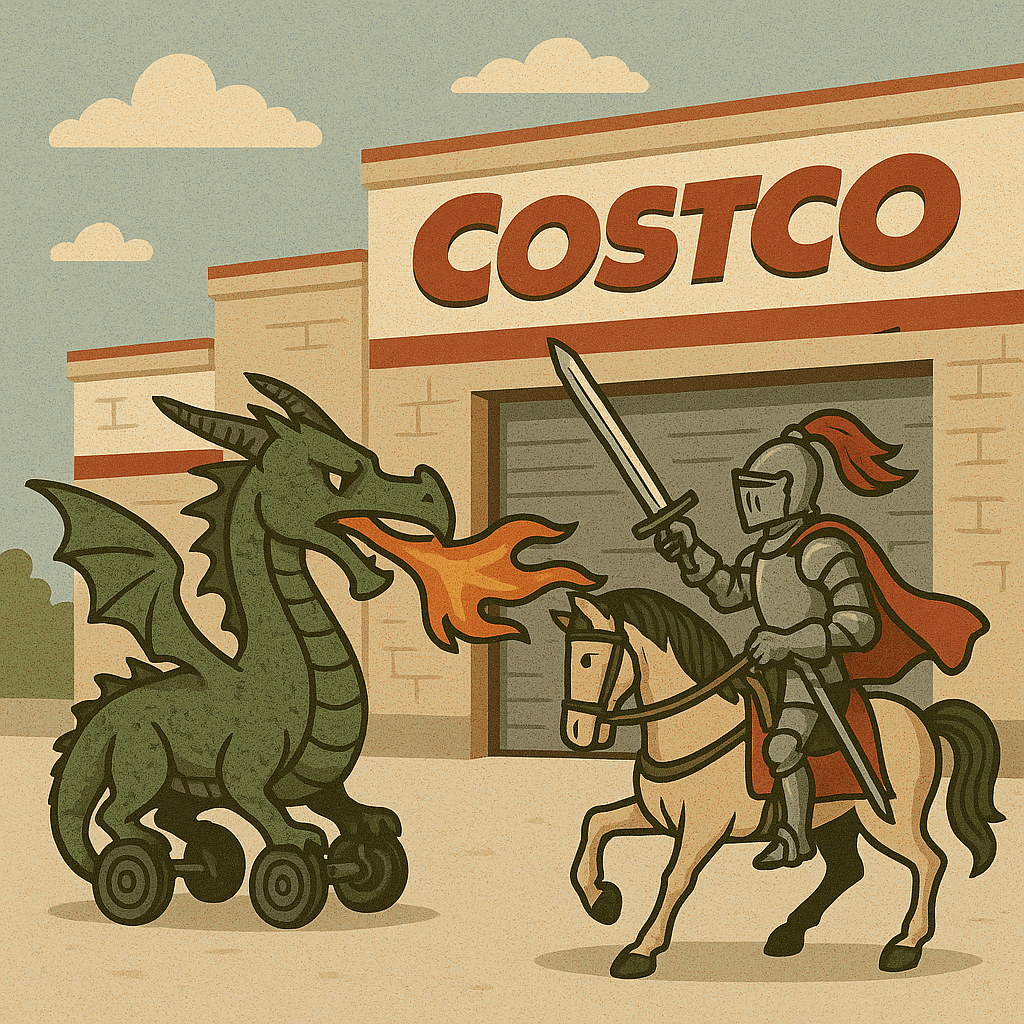
So maybe the secret isn’t to aim for flawless goals, but to accept that your path will be jagged, uncomfortable, and littered with plot twists. That’s not the exception – that’s the point. The dragon isn’t blocking your story; the dragon is your story.
So stop chasing goals. Start writing your epic. The dragons aren’t a glitch in the plan; they are the plan.
And when you’re sobbing on the bathroom floor, wondering why you thought you could ever pull this off, don’t panic. That’s just the part of the movie where the hero grows.

 The Creative Quill
Leave a comment