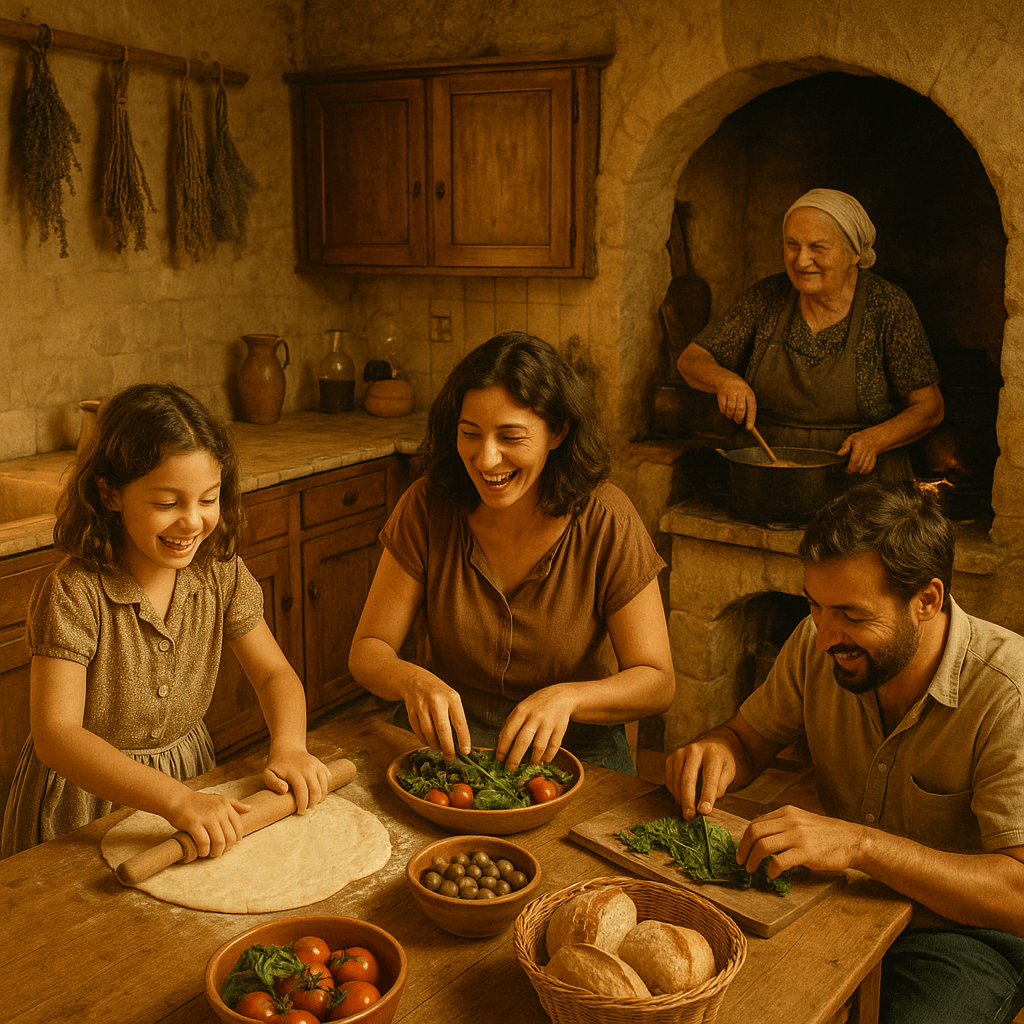
Every so often, I come across a story that makes me pause, sit back, and think deeply about the way I live my life. Reading Anastasia Miari’s article, What 100 Mediterranean Grandmothers Shared About Leading Happy Lives in Condé Nast Traveler, I found myself doing more than nodding along; I was transported. Each kitchen she described felt like one I’d been in before: crowded, warm, and alive with the smells of simmering tomatoes and fresh bread. Her stories about nonnas, yiayias, and matriarchs across the Mediterranean weren’t just about recipes; they were about a way of life that feels both timeless and urgent in our world today.
Anastasia Miari set out on “an odyssey to cook with Mediterranean grandmothers across the breadth of the entire Med basin for her new cookbook.” Yes, the food descriptions made my stomach growl, but what really struck me were the deeper lessons tucked inside these kitchens. What began as a culinary adventure unfolded into something more profound: a tapestry of wisdom about food, family, and longevity.
The lessons about waste, resilience, balance, and joy are more about the philosophy of living than about cooking techniques. The lessons are reminders of how we approach food, which often mirrors how we approach life itself.
I couldn’t help but linger over the small details. A grandmother rinsing out a feta tub to reuse it as a lunchbox. Another swirling water inside a nearly empty jar of passata to coax out the last ruby-red remnants of tomato. These gestures are ordinary, almost forgettable until you realize how extraordinary they are in their quiet wisdom. Nothing wasted, nothing taken for granted. I thought about my own kitchen, about the scraps I’ve tossed without much thought. These women didn’t see scraps. They saw possibilities, nourishment, and maybe even love.
I smiled at the part when Anastasia talks about her own nonna Carmela and the jarred tomatoes from her summer bounty. One should never eat a fresh tomato in November. How many times have I done exactly that, plucked a pale, flavorless tomato from the store shelf simply because it was there, not because it was good? These grandmothers would scoff, and rightly so. They know what we forget: flavor belongs to the seasons. In winter, tomatoes are preserved in jars, bursting with the memory of summer sunlight. In summer, they’re pulled warm from the vine and sliced into salads or simmered into sauces. This is a lesson I learned as a little girl. From the unforgettable scent of tomato plants in my grandparents’ orchard, to my parents’ garden, and now to my own, I only indulge in freshly picked tomatoes during the summer. Perhaps part of what makes those flavors so intoxicating is their fleeting nature. We aren’t meant to have everything all the time. The wisdom of the Mediterranean kitchen has always been about embracing limits, about making do with what’s on hand.
The concept of Cucina Povera emerged from that very philosophy. Translated to mean ‘the kitchen of the poor’, it kept echoing in my head. It isn’t just about stretching a meal; it’s about turning what little you have into something hearty enough to feed not only the stomach but the spirit. It goes beyond repurposing vegetable peels and scraps into a rich broth or transforming day-old bread into croutons or breadcrumbs. That same stale bread, in the hands of a Tunisian grandmother, was transformed into a chickpea stew brimming with harissa and eggs, a dish that sounds decadent but was born out of necessity. Biscotti, baked twice so they’d last through winter, became both a sweet treat and a survival tactic. It made me pause and ask myself: how often do I chase after the novel or the complicated when the best meals often come from what’s already waiting in my pantry?
And then there was fasting. Whether it was Lent in Italy, Ramadan in Tunisia, or the cycles of restraint in Greece, the pattern was the same: pause, hold back, then feast, not in excess, not in guilt, but in rhythm. It was a shared rhythm in my family, both of my grandmothers would fast on Wednesdays and Fridays, even when it wasn’t Lent. In a world that pushes constant consumption, this struck me as radical. What would it mean to build those pauses back into my own life? To let hunger remind me of gratitude, and to let celebration feel earned again?
But the lesson that wrapped itself around me the tightest was this: the Mediterranean diet isn’t about food at all. It’s about living. It’s about walking to the market every morning and chatting with neighbors along the way. It’s about naps taken without apology, swims in the sea when your knees still creak, and tables crowded with family and friends. It’s about eating vegetables because they grow right outside your door, not because a doctor handed you a list. It’s about meat as a treat, wine as a pleasure, and joy as a daily requirement.
I find myself thinking about my own life and its rhythms. I want more of this. More slowness, more gratitude, more meals built from what’s already in the fridge, more conversations that stretch longer than the meal itself. I want to notice the seasons, not just in the trees outside but in the produce on my plate. I want to waste less, share more, and laugh in the kitchen even when the soup spills or the bread burns.
My children, too, have found their own rhythms in my kitchen. When they come home on the weekends for a visit, they hover at the counter with me, chopping, stirring, tasting, and laughing, just as I once did with my dad nearly every Sunday as we cooked dinner together. The scene wasn’t always perfect. There were disagreements and flashes of short tempers that were quickly diffused as we carried on with the cooking. Our quarrels seemed to evaporate in the steam rising from the BBQ, as was my father’s specialty, and before long, we were laughing again, moving forward as if nothing had ever happened.
Those afternoons were less about the food and more about the ritual: the rhythm of chopping onions and measuring out seasonings side by side, the quiet pride of setting a meal that was made together on the table.
My children carry on this tradition of cooking side by side, turning family dinners into a mix of food, laughter, and a little chaos. Not only do they cook for themselves during the week, experimenting with their own flavors and favorite dishes, but when I make family dinners, they are right there beside me, eager participants in the tradition that has always anchored our family. There are the same flashes of impatience or bursts of yelling because when the kids are together, it doesn’t take long before they slip back into acting silly. They get the giggles, usually at the worst possible moment, and though it drives me crazy at first, their laughter always spills over until it’s contagious, until the laughter takes over and the whole kitchen is caught up in it.
Holiday recipes, especially, become a family affair, with everyone rolling dough, stirring sauces, and sharing the same stories we’ve told for years. The kitchen has become our gathering place, a living archive of memories and traditions, binding generations together one meal at a time.
The truth is, longevity isn’t hidden in a superfood or a supplement. It’s found in these tiny, steady rituals. In the way a grandmother reuses a feta tub. In the way stale bread becomes a feast. In the way a nap restores more than just the body.
And maybe that’s why this story struck such a chord: because it reminded me of my own family table. My mom’s, my Zia Netta’s, and my nonna’s kitchens, crowded and loud, where leftovers were never just leftovers, they were tomorrow’s meal, repackaged and reinvented, where food wasn’t about extravagance, but about togetherness. Where we ate slowly, laughed freely, and never left without taking something home in a mismatched container. Those memories aren’t just nostalgic; they serve as a blueprint for the future. A reminder that the real recipe for a long, full life is simple: waste little, love much, and always make room at the table.


 The Creative Quill
Leave a comment