Halloween isn’t just about plastic pumpkins, pillowcases full of candy, and kids stuffed into costumes that never quite fit. Underneath all that, the holiday is tangled up in centuries of legends, old rituals, and the odd superstition that still slips into our modern celebrations. Black cats darting across your path, broken mirrors, unlucky numbers, these eerie little “rules” have been passed down with the same seriousness as “look both ways before crossing the street” or “don’t touch a hot stove.” Some began as practical advice, others as folklore, and plenty just stuck around because they made for good stories on dark October nights around a blazing firepit. So this year, while you’re handing out candy or brushing away fake cobwebs (or real ones, no judgment), let’s peek behind the curtain at the superstitions that still haunt Halloween.
Black Cats
Black cats might be the ultimate Halloween superstition. The story goes that if one crosses your path, bad luck is sure to follow. But when you think about it, a black cat stretched out in a sunny window or curled up on your lap hardly feels like an omen of doom. So how did these sleek little felines end up with such a bad rap?
In medieval Europe, life was already scary enough with plagues, famines, and wars, you name it. People didn’t need much more to worry about, but then religious leaders decided to toss black cats into the “witchcraft starter pack.” Cue mass paranoia. Suddenly, a perfectly ordinary cat slinking through the night with glowing eyes wasn’t just a mouser, it was a furry omen of doom. To villagers already on edge about curses or nosy neighbors dabbling in “dark arts,” seeing a black cat dart across the path felt less like a coincidence and more like a supernatural jump scare.
Numerology
In most places, the number four is just… four. No big deal. But in Japan and China, it gives people the creeps. One way to say it, shi, sounds exactly like the word for death. Not the kind of thing you want baked into your address or hotel room number. Even feng shui, the ancient practice of arranging your space for harmony and balance, gives four the side-eye, treating it as a magnet for bad energy.
That’s why you’ll find buildings skipping the fourth floor entirely, jumping straight from three to five, like nobody will notice. Gift-giving gets tricky too. Wrap up four of anything, and you’re basically handing someone a box of bad luck tied with a bow.
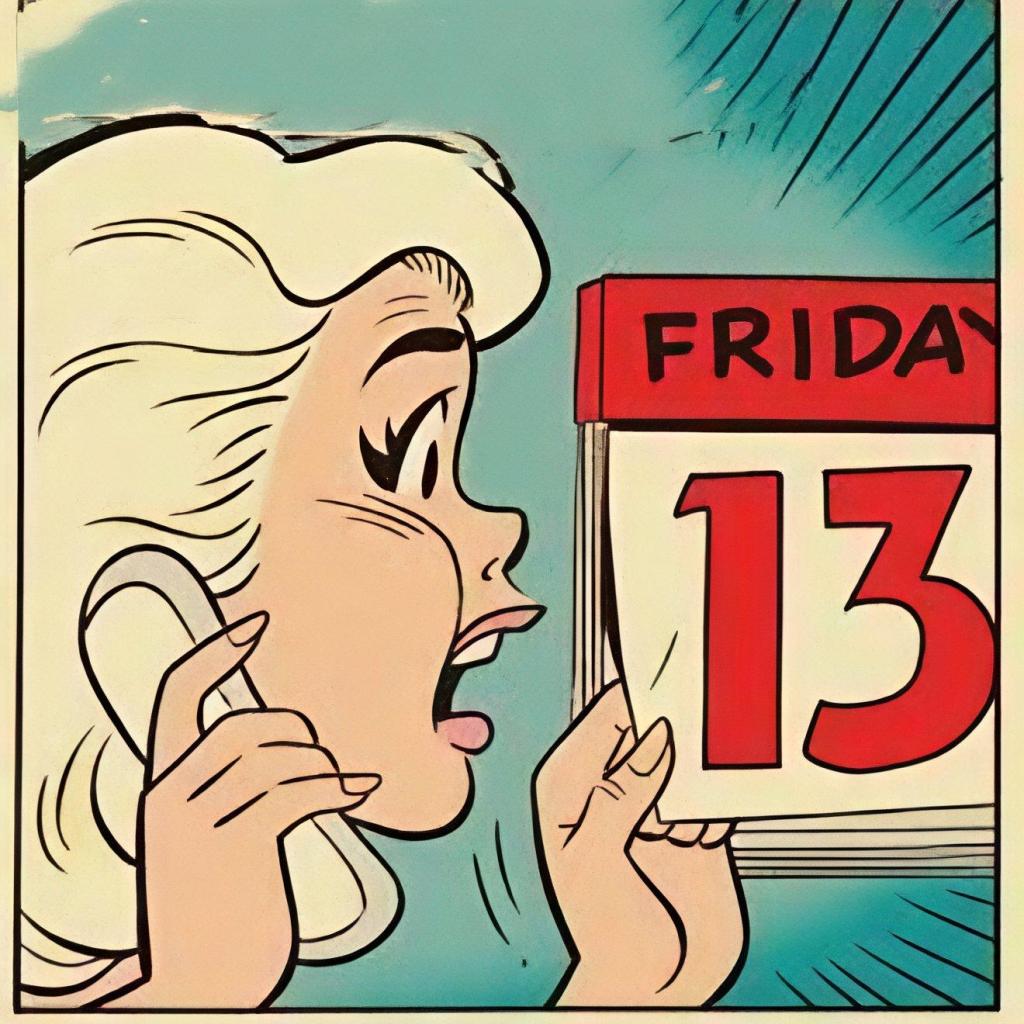
Sound familiar? It should. Americans have the same hang-up with the number thirteen. Hotels skip the thirteenth floor, airlines skip row thirteen, and plenty of dinner hosts refuse to seat 13 at a table. The origins vary, from Judas at the Last Supper to Loki crashing a feast in Norse mythology, but the superstition stuck. Different number, different culture, same uneasy sense that fate might be doing a little math behind the scenes.
The Cauldron
For the pagan Celts, the cauldron carried a much deeper meaning than the spooky prop we see on Halloween today. They believed that when a person died, their soul didn’t just vanish; it returned to the great cauldron of the crone, a symbol of the Earth Mother herself. This mystical vessel was thought of as both a womb and a gateway. Souls rested there until the goddess stirred the pot, blending old with new and allowing rebirth and reincarnation to occur. In other words, the cauldron wasn’t about boiling up curses or poisons; it was about the endless cycle of life, death, and renewal.
Over time, though, that sacred image was reshaped by folklore and fear. Instead of representing the womb of creation, the cauldron became the witch’s brew: a steaming, bubbling pot where mysterious concoctions hissed and fumed. What was once a symbol of life and rebirth slowly transformed into an emblem of magic, mischief, and danger.
Trick or Treating in Costumes
Before Halloween was all pumpkins, plastic spiders, and kids hopped up on sugar, the Celts were throwing Samhain, a festival with way more edge. They believed the veil between the living and dead basically came down like a cheap shower curtain, and spirits could just waltz right in. Some even showed up at your door, disguised as beggars, looking for food or coins. Turn them away and – BAM! You’re cursed – no full-size candy bar for you.
The Celts weren’t stupid, though. They figured the best way to survive was to blend in, so they dressed up like ghouls to trick the spirits into thinking they were part of the squad. Fast forward a few centuries and a boat ride to America, and the whole thing mellowed out. By the 1950s, the ghosts were gone, the curses got dropped, and kids were shaking down the neighborhood for candy instead. Honestly? Big upgrade.
** I was planning to stop at four superstitions, but then I remembered, hello, the curse of four! No way am I tempting fate like that. So here we are with a fifth and final superstition, to keep the universe off my back. You’re welcome, karma.
Spiders
Spiders have been creeping people out since forever, which is probably why they’ve earned their spot as a Halloween mascot right up there with bats and black cats. Spiders got roped into medieval folklore as the unofficial interns of witches. Too many spiders crawling around? Clearly not a pest problem, must be sorcery. One particularly dramatic superstition even claimed that if a spider fell into a candle flame and burned, witches were lurking nearby. (Because obviously witches had nothing better to do than hover around your drafty cottage waiting for arachnid fireworks.)
But not all spider stories were nightmare fuel. Another superstition spun a softer web: spotting a spider on Halloween supposedly meant the spirit of a loved one was close, watching over you. So, depending on who you asked, spiders were either tiny demons in league with witches or miniature grief counselors on eight legs. Honestly, that’s the whole deal with superstitions, equal parts spooky warning and oddly comforting pep talk.
Superstitions may look different from place to place, but the themes are basically the same: unlucky numbers, lucky charms, weird little hand gestures, and animals that get way too much credit for messing with our fate. Whether it’s four in Japan or 13 in the U.S., people everywhere are just trying to outsmart the universe with a few tricks up their sleeve.
At their core, superstitions are survival stories dressed in mystery. They’re our way of pretending we’ve got the upper hand when the world feels unpredictable. Some were born out of fear, others out of hope, and plenty stuck around because they made for great ghost stories told over a flickering fire.
And not all of them are creepy. Some are just plain fun. Maybe it’s the “lucky” socks you won’t throw out because your team finally won a playoff game, or the mandatory ice cream cone after a doctor’s appointment (science may not back that one up, but I’d argue it works). These little quirks remind us that superstitions aren’t just about fending off bad luck; they’re about comfort, connection, and sometimes giving yourself an excuse for dessert.
So this Halloween, as you’re dodging black cats and pretending not to notice the cracks in the sidewalk, why not invent a superstition of your own? Who knows, your kids, or even your grandkids, might just roll their eyes and keep it alive for generations.

 The Creative Quill
Leave a comment