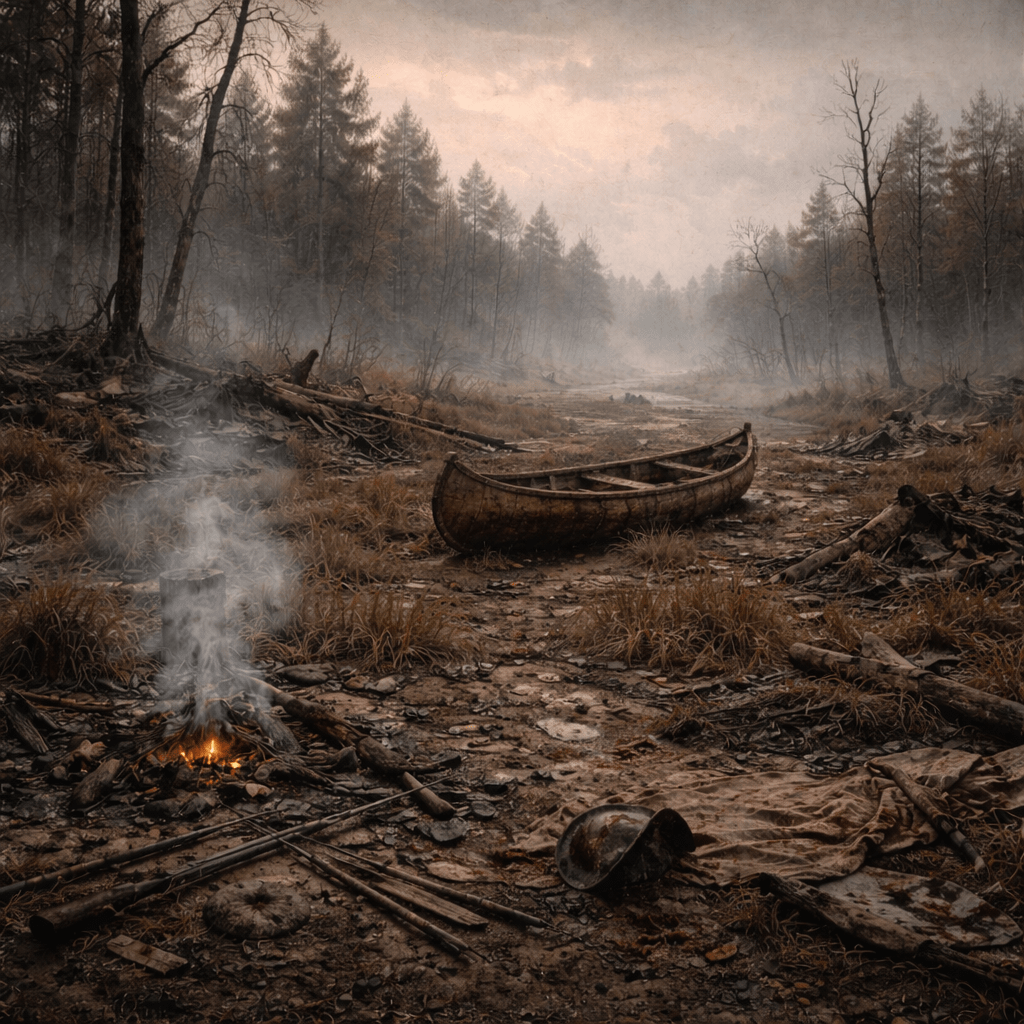
After a brief winter pause, I’m glad to return to the story of Chicago. It is one that never really stopped unfolding. To recap, Chicago began as a place that listened, shaped by rivers and portages long before it had a name. Marquette and Jolliet moved through it carefully, learning the land’s limits, while La Salle and Tonti arrived heavier, louder, convinced they could force the ground to yield. As French control slipped, firewater, forbidden trade, and broken promises turned the Portage into a shadowed corridor where the Potawatomi held the balance of power. The Fox Wars proved the interior would not submit quietly, and the land watched alliances harden and crack. By the early 1750s, silence itself had become a warning, and Chicago felt the French and Indian War coming long before anyone dared speak its name.
By the time anyone dared call it a war, it was already in the air.
Chicago didn’t learn about it from proclamations or dispatches. It learned the way places always do, through absence. Through the way certain people stopped coming back, through how voices softened without being asked. The marsh itself seemed to lean inward, as if listening for something it didn’t want to hear.
The first sign was movement.
Canoes still arrived, but they didn’t linger at the water’s edge anymore. Men stepped out, drank quickly, looked around once, and moved on. The old ease was gone. No long stories. No trading jokes. No wasting daylight. People crossed the Portage the way you cross a threshold you might not return through.
The Warriors came quietly.
Not in numbers. Not announcing anything. Just one or two at a time, faces painted, eyes sharp, asking questions that didn’t need answers spoken out loud. They stayed long enough to read the land and the people, then disappeared back into the tallgrass.
Behind them came the French.
They used to arrive loudly. Certain. Full of plans. Now they came thin and watchful, carrying letters they didn’t open and instructions they didn’t trust. They talked about supply problems and misunderstandings, about delays and bad luck. But the land knew fear when it heard it.
The Portage stayed open.
That was the most dangerous thing of all.
Everyone still needed it. Everyone still passed through. But no one crossed it the same way twice. Each step felt heavier, as if the ground itself were keeping count.
Potawatomi families watched from the edges of the marsh.
They noticed which traders returned and which did not. Which promises were repeated and which quietly dropped. They heard the tone change long before the words did. They had lived through enough shifts to recognize the sound of an empire losing its footing.
When confirmation finally arrived, it didn’t come dressed as victory or defeat.
It came as a canoe.
French soldiers stepped out, hollow-eyed, uniforms torn, hands shaking from something colder than exhaustion. They didn’t boast. They didn’t threaten. They didn’t explain. They didn’t need to.
Chicago understood.
The war had found its way here, not with cannon fire, but with breath and rumor and retreat. The slow collapse of the order the French had sworn would endure, forts weakened, alliances frayed, and supply lines unraveled. Slowly, the three things the French had promised would hold, protection, trade, and reassurance, disappeared like a breath on the wind.
After that, the ground itself felt less forgiving.
People stayed less, watched more, and chose their words carefully. The marsh remained still, neither peaceful nor safe, just alert, as though it had seen this before and knew better than to flinch.
When the fighting elsewhere finally burned itself out, the quiet that followed wasn’t relief.
It was vacancy.
French voices faded. Familiar paths emptied. New expectations crept in behind them, uninvited and poorly understood. The war had ended on paper, but Chicago felt only the shifting of weight from one power to another, neither of them truly belonging here.
The rivers still moved.
The Portage still held.
But something essential had changed.
And somewhere beyond the marsh, a man named Jean-Baptiste Point DuSable was moving through a continent rearranged by violence, toward a place that had learned how to wait, how to watch, and how to survive what came next.
The war was finished, but Chicago was not done with its consequences.
When the fighting elsewhere finally burned itself out, the quiet that followed wasn’t relief.
It was a vacancy.
Chicago had never been a place where armies lined up; it was a place where things passed through. During the war, the marsh swallowed rumors, carried warnings, and let men move quietly between worlds while empires argued at a distance. When the French pulled back, they didn’t leave a victory behind; they left gaps: routes that went silent, familiar faces that didn’t return, promises that stopped traveling the rivers. The British stepped into that emptiness, assuming authority, but they never understood the land they’d inherited or the people who still held it. What remained in Chicago was not peace, but room. An unsettled stretch of ground waiting for someone who could live without banners, speak without demanding, and move through the Portage not as a conqueror, but as a neighbor.

 The Creative Quill
Leave a comment