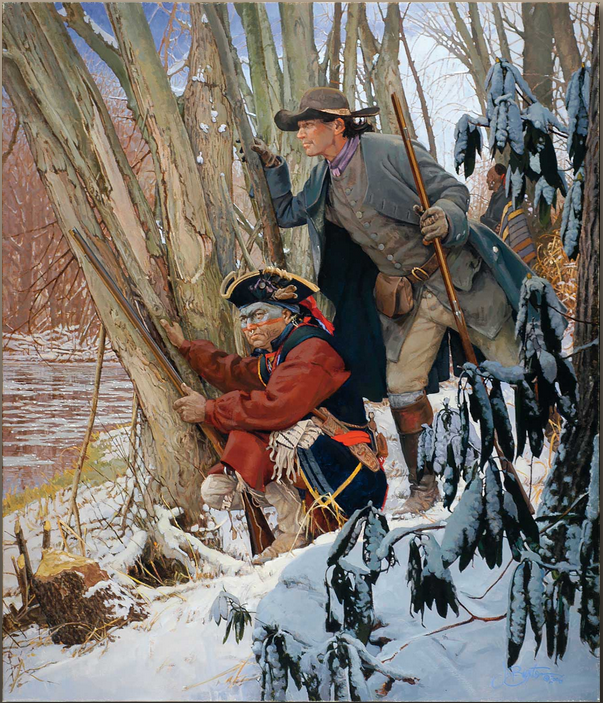
The British thought the war was over.
The land disagreed.
When the French left, the British stepped forward as if the interior had been emptied for them. They brought orders instead of gifts. Expectations instead of listening. They spoke of victory and authority, assuming the ground would recognize the change.
It didn’t.
Across the Great Lakes, something hardened. Nations who had tolerated French arrogance saw something colder in the British: less patient, less curious, less willing to negotiate. Trade slowed. Words were weighed. Paths that had once welcomed strangers began to close without ceremony.
The British would later call what followed Pontiac’s War.The British would later call what followed Pontiac’s War.
Chicago felt it not as violence, but as refusal.
To the people who lived here, that was the warning.
The British were not French.
They did not ask.
They did not wait.
They did not understand that authority in this place was something you earned slowly, or not at all.
Chicago grew careful.
Canoes stopped arriving on schedule. Travelers came only when necessary. The Portage grew watchful. What had once been a shared crossing became a place of quiet judgment, where every step was noticed and every visitor measured.
The French had operated on familiarity. People knew who was who, what gifts meant, how long someone could stay, and when a visit turned into a problem. After the war, that structure vanished. The British arrived assuming authority instead of a relationship, cutting gifts, issuing orders, and treating passage as a right rather than something granted. That uncertainty made every newcomer a question mark.
So canoes approached and turned away because no one knew what a stranger might bring anymore: demands, trouble, retaliation, expectations. Meetings were shortened because words had begun to carry consequences, and saying too much could bind you to the wrong side. Eyes followed strangers longer because movement itself had become information, and information was suddenly dangerous.
And the Portage narrowed in trust because trust is what keeps a crossing open.
When power becomes unpredictable, access tightens.
Not by force, but by watching, waiting, and deciding who really belongs there.
Elsewhere, the resistance flared openly. Forts fell. Others were surrounded and starved into fear. Traders vanished. Messages traveled faster than armies ever could. The British called it rebellion. The people living here knew it as something else entirely.
A correction.
Chicago did not rise up.
It withdrew.
The land had learned long ago that not every fight needs noise. Sometimes the most effective resistance is absence. Silence. Making the wrong kind of authority feel unwelcome without ever drawing a blade.
The British mistook that quiet for submission. They stayed. They waited. They assumed time would do the work for them.
But the war did not end cleanly. It faded unevenly, leaving mistrust in its wake. No treaties repaired what had broken. No victory restored what had been lost. Chicago remained unsettled, neither French nor truly British, and uninterested in becoming either.
Movement through the Portage became deliberate. Each crossing weighed. Each visitor measured. Neutral ground does not stay neutral when the world demands a side, and Chicago had no interest in choosing too quickly.
What Pontiac’s War left behind was not peace, but clarity.
Empires could pass through this place.
They could claim it on paper.
They could argue over it from far away.
But Chicago would not open itself to them easily again.
And in that narrowed space, after war, after resistance, after authority had learned its limits, the land waited for someone different. Not a commander. Not a governor. Not a conqueror.
Someone who knew how to listen first.

 The Creative Quill
Leave a comment