Chicago didn’t arrive with a bang.
It gathered itself around a man who knew how to work and knew how to wait.
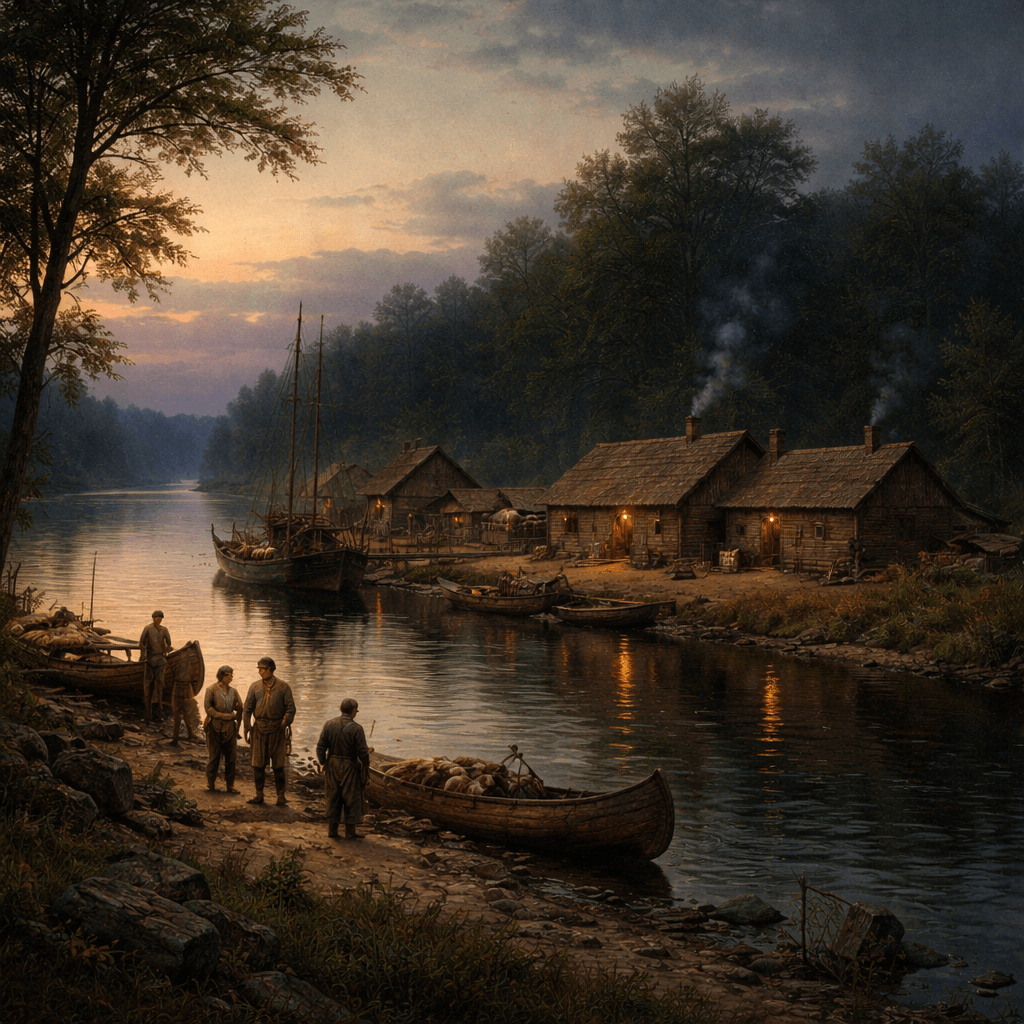
By the time anyone bothered to notice him, Jean-Baptiste Point DuSable was already moving through the Great Lakes like someone who understood how to survive between worlds. He traded fur. He traded grain. He followed water, not flags. Somewhere along those routes, he stopped at a bend in the Chicago River and decided this was a place worth returning to.
So he did.
At first, it wasn’t grand. Just a base. A place to land, store, trade, and rest. But Chicago has always grown around usefulness. Around people who know how to make things hold together. When DuSable came back again in the early 1780s, he didn’t just pass through. He built.
By 1784, buildings rose along the north bank of the river, near where Michigan Avenue would someday thunder. They weren’t meant to impress anyone. They were meant to last. And they did. Trade gathered there. People did too. Quietly, steadily, Chicago began to behave like a place instead of a stop.
DuSable did whatever the land asked of him. Carpenter. Cooper. Miller. Distiller. If something needed shaping, building, or fixing, he learned how to do it. That kind of adaptability goes a long way in a place like this.
He and Kitihawa, later called Catherine, raised a family there. Their first child, a daughter named Eulalia, was born at the river’s edge. The first recorded birth in Chicago. Chicago has always liked beginnings like that.
Living among the Potowatomi, DuSable listened more than he spoke. He became deeply involved in their affairs, trying and failing to become a chief. That failure mattered. It meant respect without entitlement. Belonging without ownership.
Eventually, after Kitihawa’s death, DuSable did something unexpected. He left.
Around 1800, he sold his property at the mouth of the river and moved west to St. Charles, Missouri. There, he returned to the work he knew best, farming, trading, and staying useful until his death in 1818. Chicago would remember him later, once it had grown loud enough to forget how quietly it began.
Long after he was gone, the city would place a plaque on an old building at Pine and Kinzie, marking the site of the first house in Chicago built by du Sable himself.
While DuSable lived and worked, the land beneath him kept changing hands without ever being asked.
France claimed Illinois just days before a war it couldn’t hold. Britain took it when that war ended. Then, colonists on the East Coast threw tea into a harbor and decided they were done being governed. Independence was declared. Virginia claimed the land. Then handed it over to settle debts. Lines were drawn. Names were changed.
Chicago stayed where it was.
By the time the Northwest Territory was carved into future states, DuSable was already there, living proof that a place doesn’t need permission to exist.
Then came the treaties.
In 1795, language was written far from the river, reserving a small square of land at the mouth of the Chicago River for future use by the United States. Six square miles. Not a city. Not a settlement.
A foothold.
But what came next would not ask permission. It would not listen, and the land would never be the same.

 The Creative Quill
Leave a comment