Here we are in the middle of January 2026, and the largest snowstorm in recorded history is currently blanketing more than half the country. Illinois, of course, had already warmed us up for this during Thanksgiving weekend, because winter here doesn’t knock politely. It kicks the door in, tracks snow across the rug, and asks what you are looking at. Depending on where you live, somewhere between seven and twelve inches fell over that weekend, followed by a cheerful little encore of two to four more inches, just in case anyone thought it was a fluke. And anyone who’s lived here longer than five minutes knows this was merely the opening act. There will be more. Many more. Big storms, little storms, storms that cancel school, storms that don’t cancel school but absolutely should have, and storms that arrive sideways simply to assert dominance.
Which means it’s officially that time of year again, the time when snow piles up, patience wears thin, and one very important question resurfaces like clockwork:
Is snow safe to eat?
Before anyone rushes to answer with science, warnings, or a condescending tone, let’s get something out of the way. You’ve eaten Illinois snow before. I don’t need a confession. I don’t need receipts. I know. Whether you did it openly or like a criminal depended entirely on what kind of parents you had. Around here, snow-eating fell into two categories: kids who ate snow, and kids who ate snow and then immediately got yelled at.
I was in the second group.
We did it anyway, obviously. Kids always do. But if my mother caught us, there would be consequences, mostly verbal, occasionally dramatic. First came the lecture about all the disgusting things floating around in snow. Then came the warning phrase that haunted childhoods across America: Don’t eat yellow snow. A sentence that somehow managed to be both educational and deeply unsettling.
And while we’re clearing things up, let’s talk about icicles. Specifically, let’s talk about how you should never eat the icicles hanging off your roof. This deserves bold lettering. As a child, I ate far more icicles than snow, which in hindsight feels like a loophole my mother accidentally left wide open. Icicles, it turns out, are not magical winter treats. They are roof runoff on a stick, made from dirt, salt, carbon, dust, fur, bacteria, and, yes, bird poop. Everything that’s been quietly living on your roof all year eventually slides down into that innocent-looking frozen spear. Delicious? No. Horrifying? Absolutely.
So what about snow itself?
According to doctors, who ruin everything but are usually right, eating snow in small amounts is generally not going to hurt you. A bite. A snowball. A taste. Fine. Snow isn’t inherently toxic. But it is full of impurities. Snowflakes form around particles in the air, meaning whatever is floating above us, pollution, dust, bacteria, can hitch a ride straight into your mouth.
Eat enough of it, and you could end up with an upset stomach, vomiting, diarrhea, or even an infection. Road snow and sidewalk snow are especially bad ideas, since they’re mixed with grime, salt, oil, and whatever unholy cocktail winter traffic creates. And if the snow looks dirty, or yellow, it’s an immediate no. Always.
Experts suggest that if you’re going to eat snow at all, freshly falling snow is the cleanest option, ideally after the storm has been going for an hour or two, once some of the airborne junk has settled. Sensible advice. Responsible. Not nearly as fun.
Which brings me to my childhood.
We were not the type of kids who bundled up to make snow angels or sculpt Pinterest-worthy snowmen. Snow days weren’t about wholesome outdoor activities. What we waited for, what we listened for, was the snow scream.
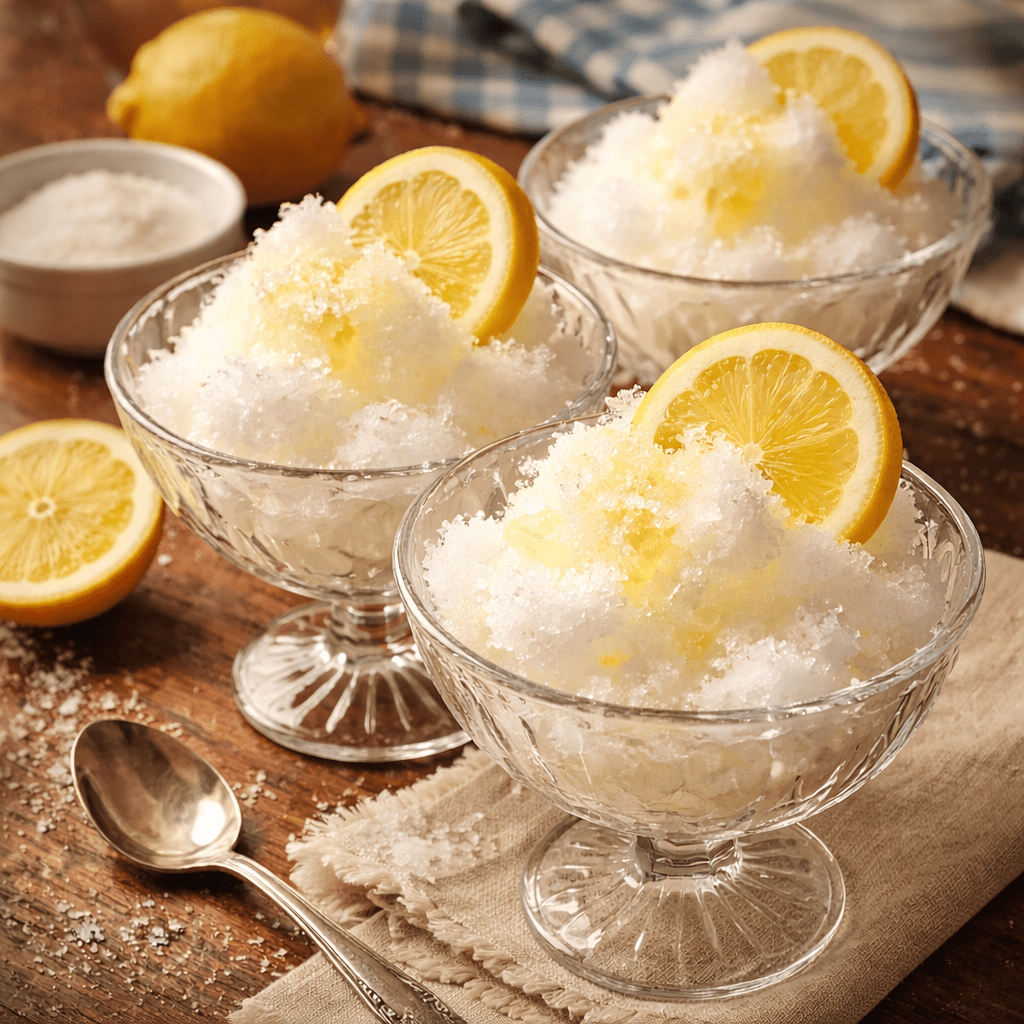
The snow scream was my mother throwing open a bedroom window, popping out the screen, and scooping snow directly off the roof of the house. Sometimes, if conditions were right, she’d grab fresh falling snow from the patio table instead. This was not impulsive. This was a system.
She’d bring it into the kitchen, squeeze fresh lemon juice over it, sprinkle it with sugar, and serve it to us in the fancy footed dessert bowls. The bowls that only came out when company came over. Snow, apparently, was worthy of a formal presentation.
We called it snow scream. Not ice cream. Snow scream. And it was perfect. Cold, sweet, slightly tart, and fleeting. It melted quickly, which felt right. You had to eat it fast. No hoarding. No saving it for later. Winter, briefly, was something generous instead of hostile.
Looking back, I realize how much trust was wrapped up in that ritual. Trust in timing. Trust in knowing where the snow came from. Trust in moderation. She didn’t scoop it off the driveway. She didn’t hand us gutter icicles. She chose fresh, clean snow and turned it into something special.
So is snow safe to eat?
Technically? Sometimes. Carefully. In moderation.
Emotionally? Absolutely.
Because for many of us, snow isn’t just frozen water falling from the sky. It’s memory. It’s the sound of a window opening. It’s the clink of a dessert bowl you weren’t supposed to touch. It’s lemon and sugar and the strange magic of winter being softened, just for a moment, by a mother who knew exactly when to yell and when to scoop.


 thecreativequill.net
Leave a reply to delicate58276f048e Cancel reply