
-
Chicago’s First Battlefield
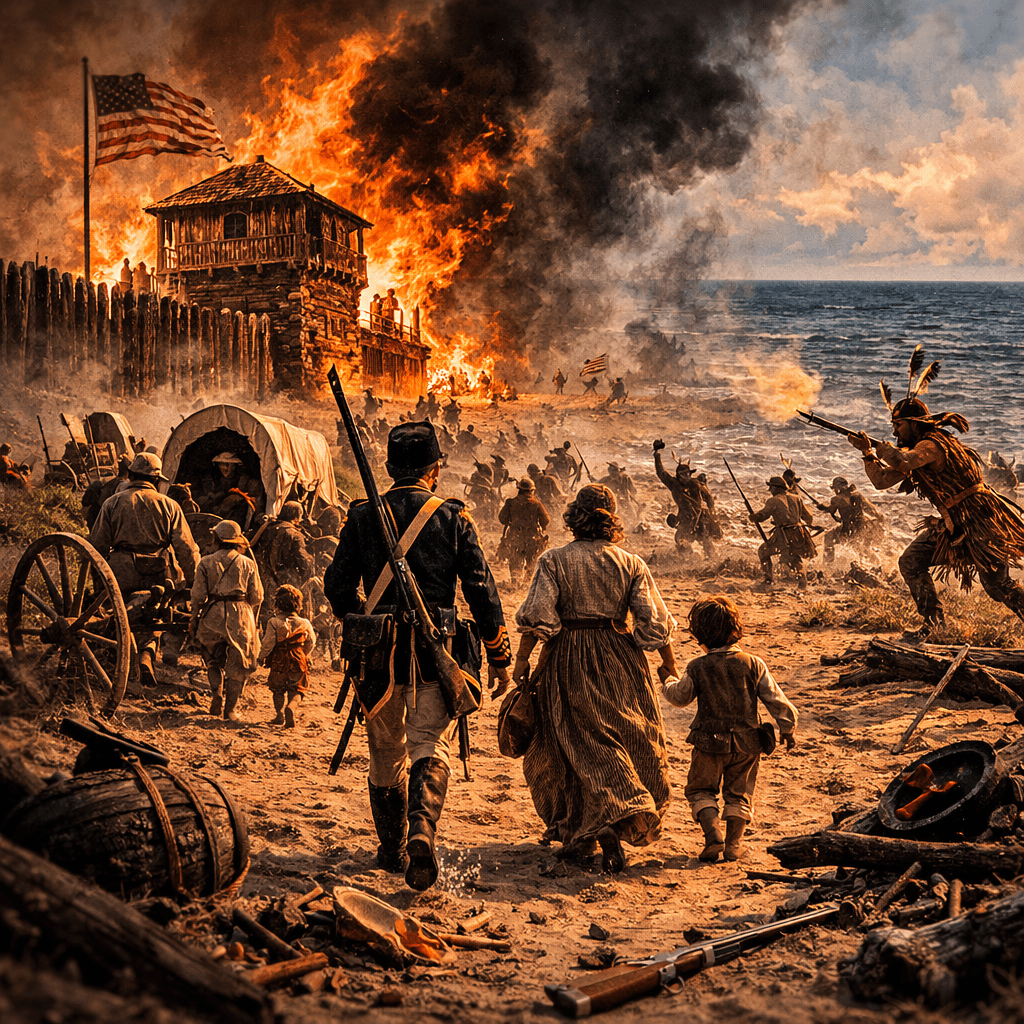
On August 15, 1812, the gates of Fort Dearborn opened and Chicago’s tiny settlement began a desperate march south along Lake Michigan. Within hours, the column would be ambushed in the dunes near today’s Near South Side. The Battle of Fort Dearborn would become the first battlefield in Chicago’s history. Continue reading
Battle of Fort Dearborn, Captain William Wells, Chicago 1812, Chicago historical series, Chicago historical storytelling, Chicago history, Chicago origins, Chicago River history, Chicago settlement history, Early American frontier, Early Chicago, Fort Dearborn, Frontier Chicago, geology, hiking, Historic Chicago, history, Illinois history, Midwest frontier history, Nathan Heald, Old Chicago, Potawatomi History, travel, War of 1812 -
The Enemy Within
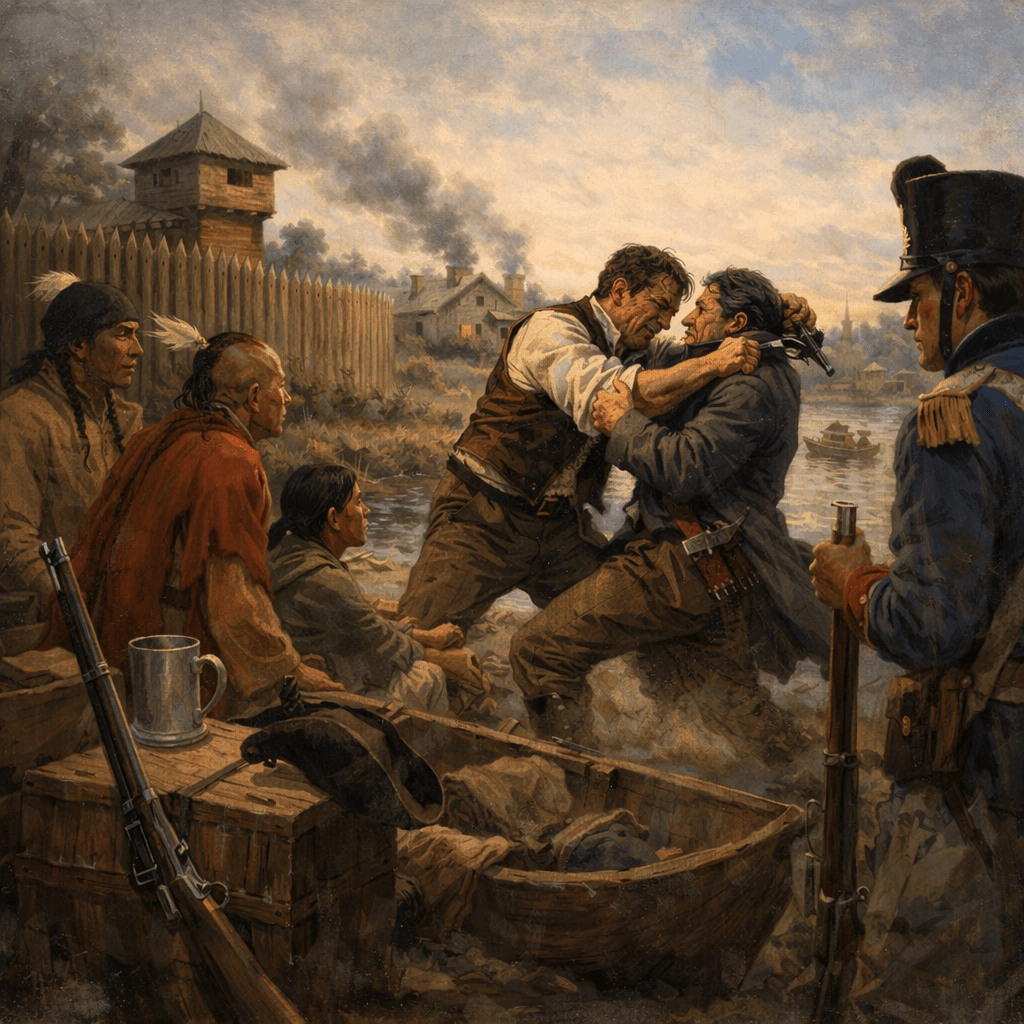
In 1812, Chicago was not yet a city, just a fort, a trading post, and fewer than one hundred Americans pressed into Indigenous ground. When tension between John Kinzie and Jean La Lime erupted into violence, the settlement proved how little space it had for conflict. Continue reading
books, Chicago 1812, Chicago Before the Grid, Chicago origins, Chicago River, DuSable, Early Chicago history, Fort Dearborn, Frontier Chicago, Historical Chicago, history, Indigenous Chicago, Jean La Lime, John Kinzie, Matthew Irwin, Nathan Heald, Pioneer Court, Potawatomi History, travel, War of 1812, writing -
The Narrowing

The story has reached a point where Chicago stops being a landscape and starts being people. Fort Dearborn in 1812 was small, small enough that every contract mattered, every loyalty showed, every disagreement carried weight. Before the fort burned, something else happened. Continue reading
Battle of Fort Dearborn, books, Chicago before the skyline, Chicago frontier, Chicago history, Chicago River 1812, Du Sable homestead location, Early Chicago history, factor definition, federal factory system, Fort Dearborn, Fort Dearborn 1812, Fort Dearborn massacre, frontier trading post, hiking, history, Jean La Lime, Jean LaLime, John Kinzie, Matthew Irwin, Nathan Heald, nature, Pioneer Court Chicago history, sutler definition, travel, War of 1812, War of 1812 Chicago -
1812
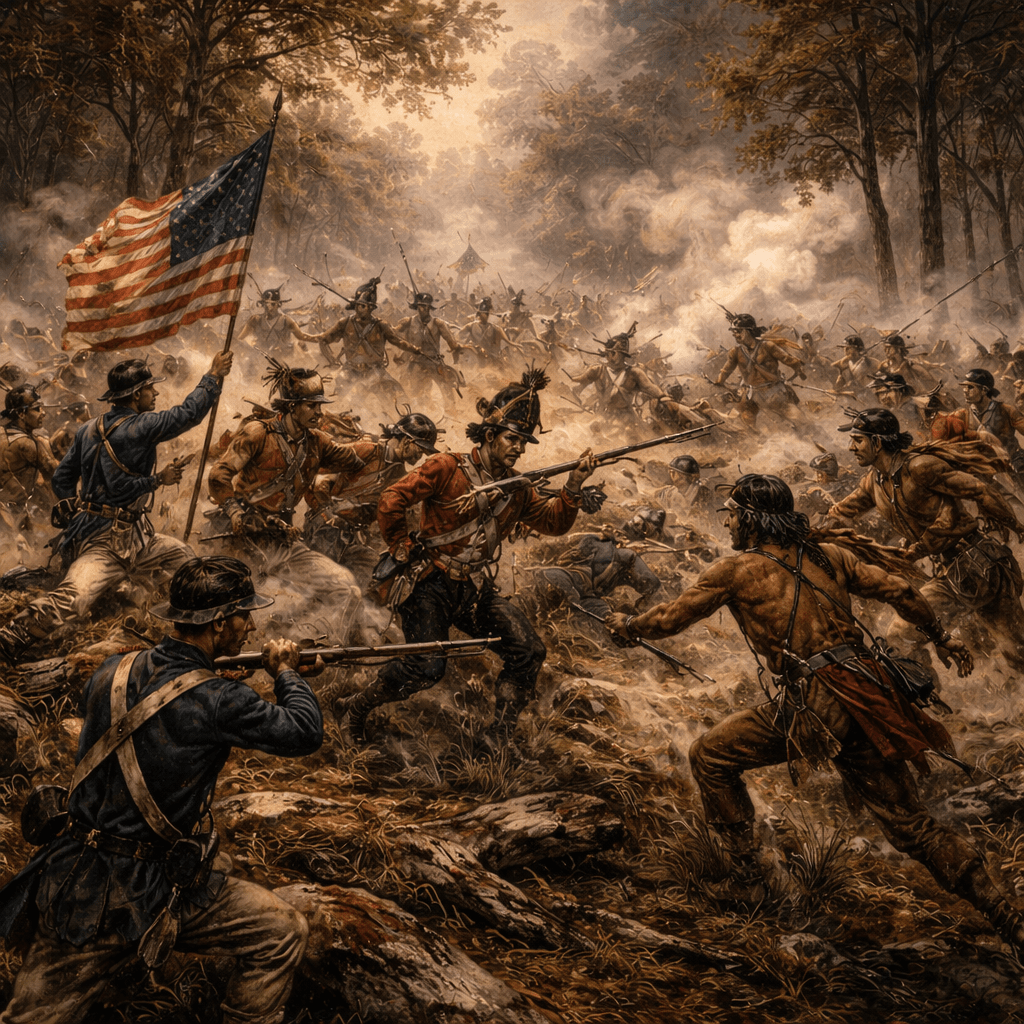
In 1812, Chicago was not a city. It was a contested outpost at the edge of a widening war. From the fall of Fort Dearborn to the death of Tecumseh, the balance of power in the Northwest Territory shifted, and the ground beneath modern Chicago was permanently altered Continue reading
-
Not so fortified
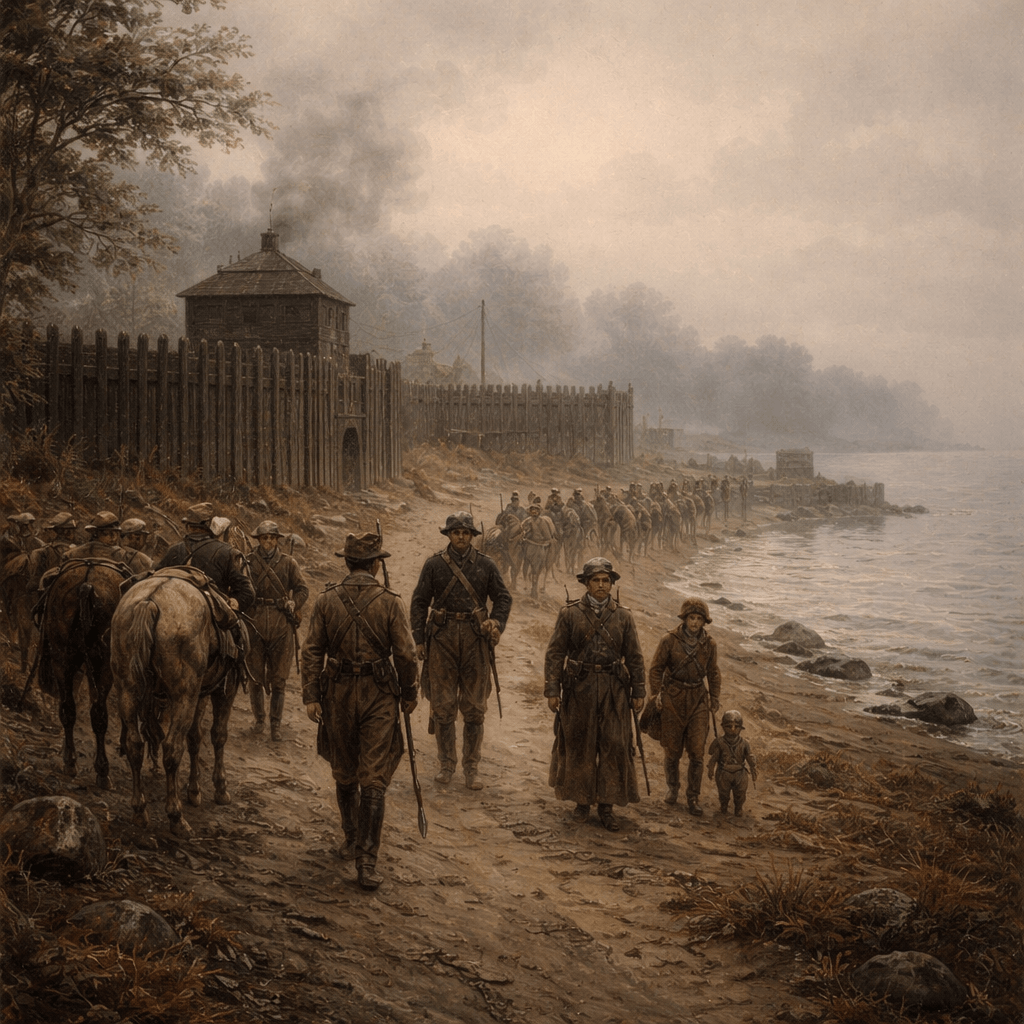
After DuSable left, Chicago didn’t rush to replace him. The river held. The marsh waited. Then certainty arrived wearing uniforms and orders, and the land answered the only way it knows how, by withdrawing. Fort Dearborn did not fail loudly. It failed quietly, and everything changed. Continue reading
 thecreativequill.net